
After the overview intro to this series, it’s time to dig
deeper into Europe’s eclipse of intelligence. The notion of lack of intelligence
highlights that the decline of Europe is not inevitable or natural, but on the
contrary, could have been avoided - and can be remedied - through the
application of intelligence broadly defined.
The relative difficulties of European societies come from a sickness that has multiple causes. It is therefore difficult to stem and treat; but the first step is of course to recognize it; too many people are still politically asleep. There are many overlapping and interconnected causes to the problems of Europe, some that go back many decades. But the fundamental problems are, as so often, economic.
European
Economic Self-flagellation
The stifling economic conditions
that Europeans have decided to live under are hindering their economic - and
thus their social - development. There a kind of collecting self-satisfied
self-flagellation going on. Europeans are deluding themselves economically - to
varying degrees depending on the country -, because they have been drinking the
Kool-Aid of socialist welfare policies for so long. Now reality is catching up.
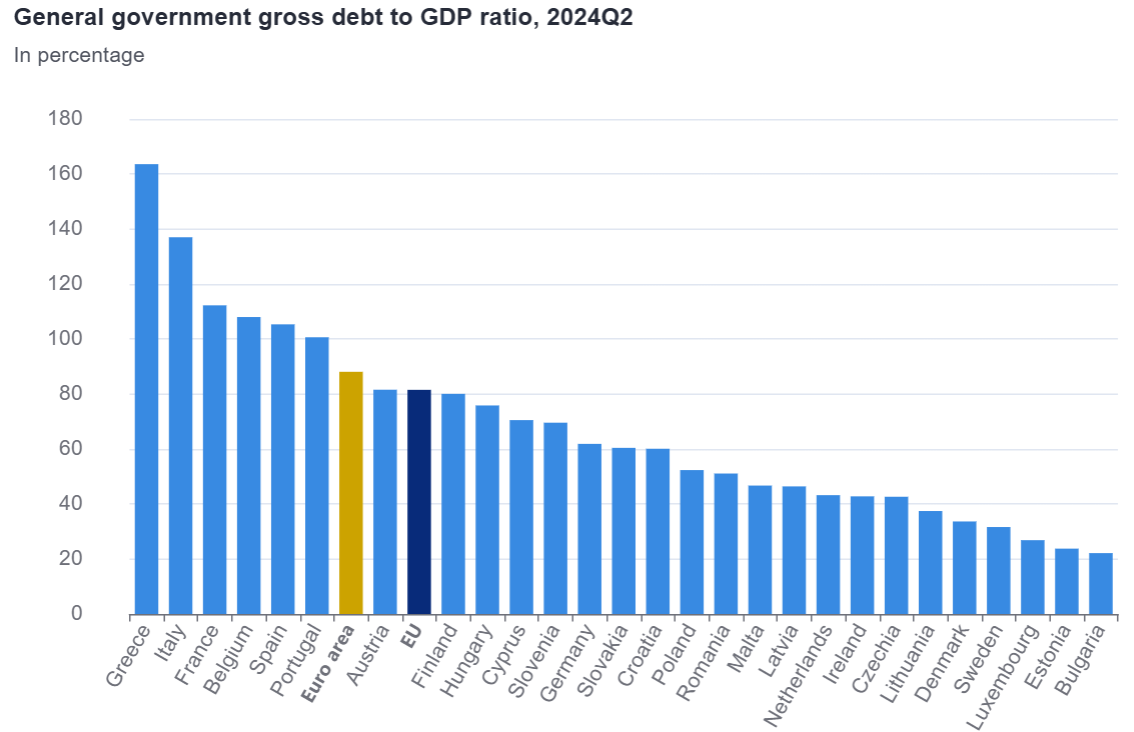
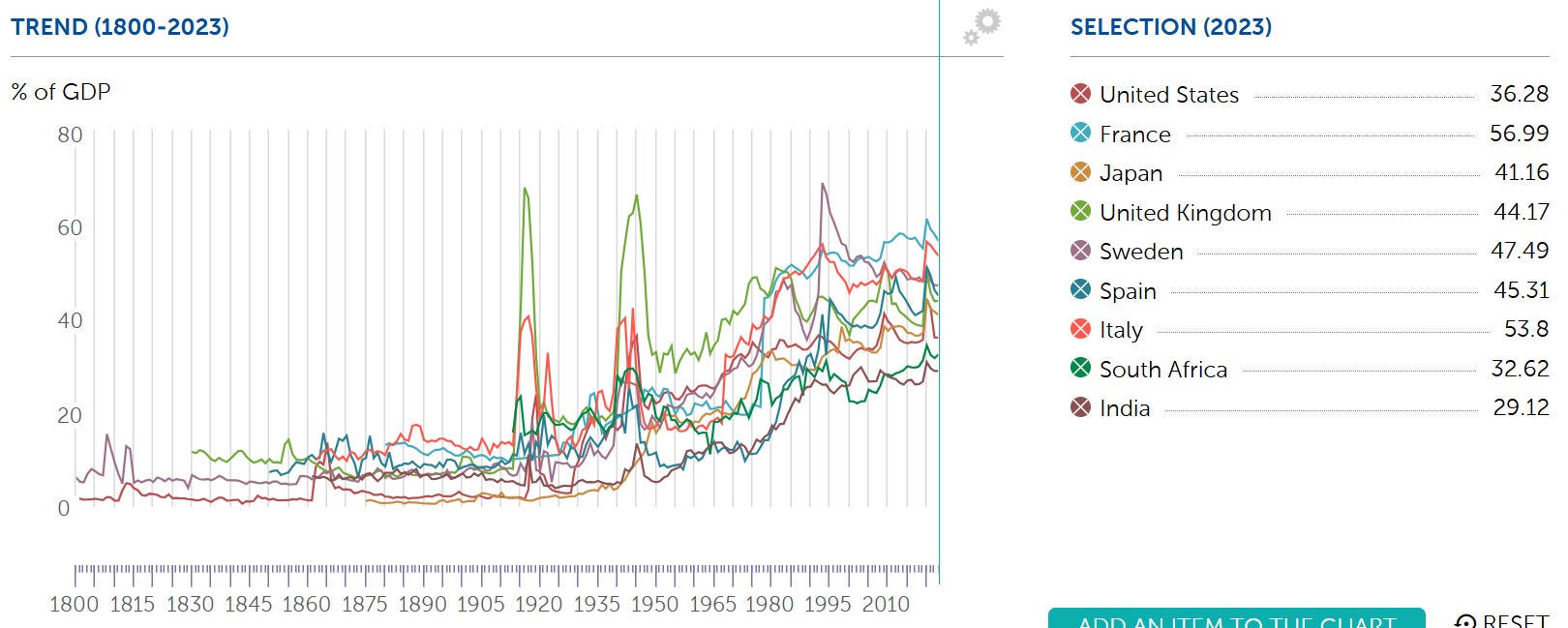
Most European societies have been
living above their means for decades, using ballooning public debt and a loose
fiscal policy. The average Euro area debt is a mind-boggling 85% of GDP,
a number that unfortunately does not shock many Europeans - though it should.
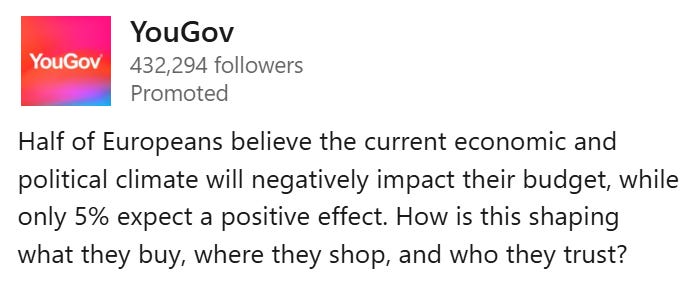
What
worked before to stimulate growth is now over (even if some EU politicians are
still trying to proposal to tax the public), and this is frustrating
decision-makers and worrying voters, even though they lack the necessary
economic education in freedom.
Despite the stimulus
medicine at ECB level that has been injected for years, the GDP growth in all
of Europe is just sluggish. The economic ECG is almost flat…
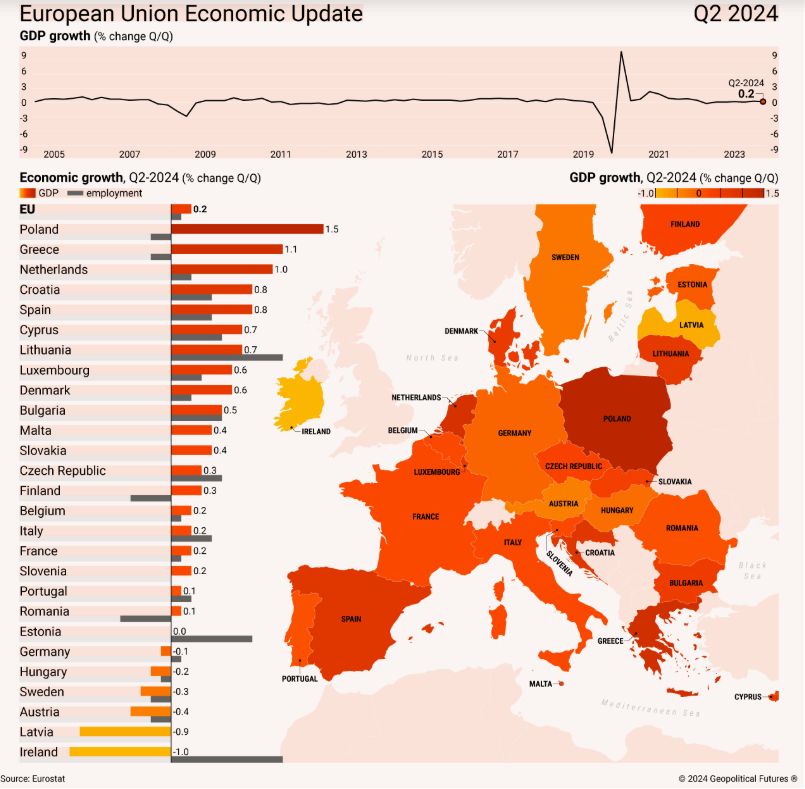
The
EU’s largest economies showed very modest growth, with Germany, traditionally
the region’s economic driver, even posting negative figures.
For those who understand the
consequences of coercive state interventionism, as opposed to the unhampered
market economy, this degradation process going on in Europe is no surprise.
Getting Less for More
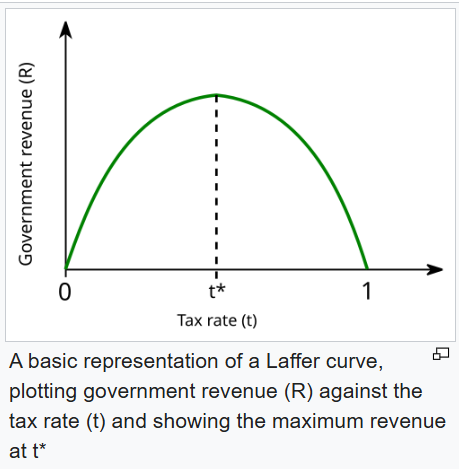
It seems hardly to have
occurred to the European elites (or they are being awfully quiet about it) that
even from an economic point of view, fiscal levels are probably far beyond the
optimum of the Laffer curve now; meaning that lowering taxes, in some areas and
in many countries, might probably even increase public income.
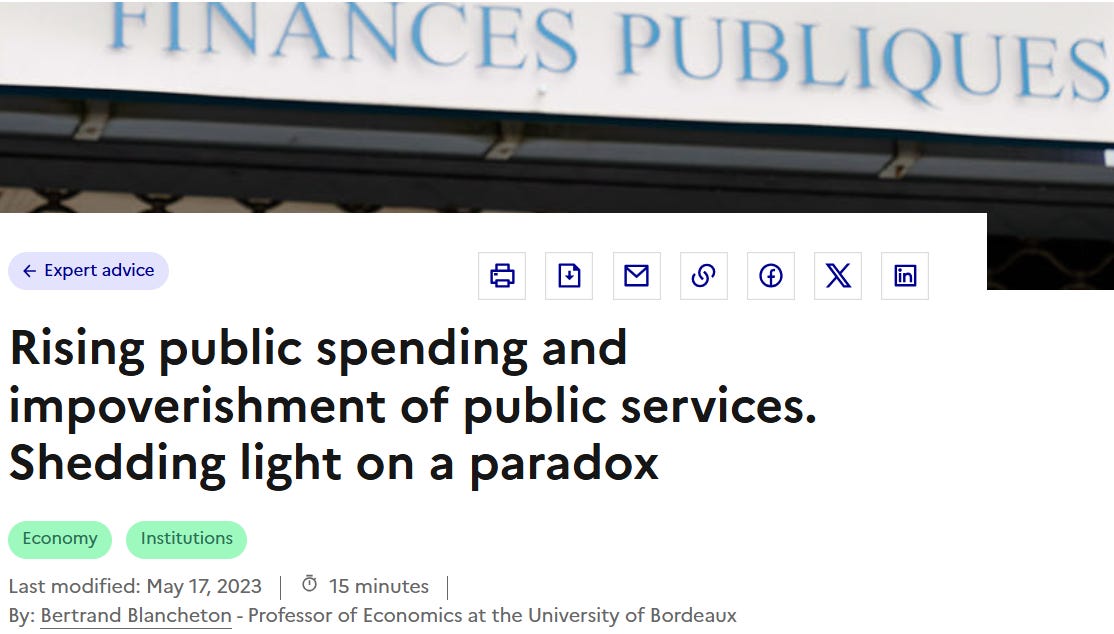
In France for instance,
even a government website is asking how it can be that social spending is
increasing year after year, while social services just get worse and worse. Yet
no political candidate in France (since F. Fillon a decade ago) is willing to
explain this decay from the obvious perspective of statism and lack of reform.
The elites of Europe are
too imprisoned in their existing interventionist ways in order to think
out-of-the-box or to propose anything new to the electorate. Indeed, truly
classically liberal programs to reform bloated bureaucracies and kickstart
moribund economies through liberalization are almost nonexistent in European
politics. This is worrying in itself. Yet in many countries there is a clear
free-market anti-globalist electorate that is up for grabs for European
politicians who still have a spine.
Beware of Germany
Additionally, Germany under
the new chancellor Merz, who was the only big EU economy that had its federal
budgets somewhat in order, has recently blown up its debt ceiling in order to
embark on the same disastrous Keynesian economic policy as its neighbors
(though this is not as simple as it sounds).
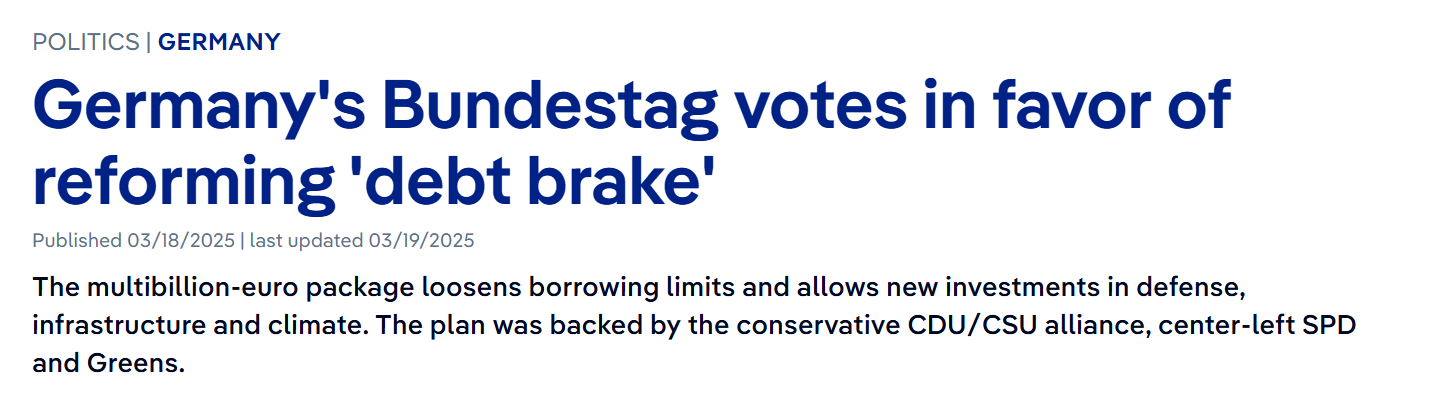
Now, even the Germany and
the other so-called “frugal” North Europeans are feeling tempted, or forced, to
loosen their economic policy (and as usual, it is Putin’s fault.)
“For years, Germany and
its austerity-loving allies were Europe’s fiscal buzzkills.
Their motto was simple:
No joint debt, no budgetary free-for-alls and absolutely no blank checks for
Brussels.
Together, this
coalition of rich northern nations — Austria, Denmark, Sweden, Finland and the
Netherlands — held the European Union’s purse strings tight, outmaneuvering
Southern Europe in marathon budget battles.”
Creating the Perfect
Economic Storm
A perfect storm is brewing
now, from a combination of several factors that ultimately the political and
financial elite in Europe is responsable for:
1.
Letting
millions of subsidy-loving and unemployment-prone immigrants
settle in Europe, while costs for state pensions rise as the
Europeans get older (in particular France which is a ticking time bomb for both
social security and pension system debt).
2.
Europe’s
companies are now uncompetitive on the international market, not least
due to Europe’s self-defeating energy sanctions imposed on Russia from
2022 and the massive push for the “green” transition, both of which are
adding hugely to the cost of industry in Europe. In an act of utter
self-punishment, Germany now even wants to make sure the still intact gas
pipeline of Northstream II can never be used again…
3.
This
situation has been further exacerbated by the economic globalization
of the last decades and new competition from nations of the Global South that
are moving up the value-chain, at the same time as Europe’s regulatory zeal is
reaching new heights driven by the EU center.
On this last point: the progressive
reduction of world trade barriers over many decades and the development of the
Global South should have been anticipated and even welcomed by Europe with the
enhancement of free trade. It should actually have spurred policies to enhance
competitiveness in Europe through a return to the kind of economy that worked
so well before the suicide of European in the form the Great War (WWI). But the
exact opposite has happened.
But the response to this
situation is of course not protectionism. The progressive reduction of world
trade barriers over many decades and the development of the Global South should
have been anticipated and even welcomed. It should actually have spurred
policies to enhance competitiveness in Europe through a return to the economy
that existed before the European suicide in the form the Great War (WWI). But
the exact opposite has happened.
In most European countries
and also at EU level, there is a refusal by the ruling elites, at least
publicly, to accept this reality. The idea from the ruling oligarchy is simply
to do more of the same; namely massive public
spending to grow
the European economies artificially, according to the Letta and the Draghi
plans. The plan is for this to happen at the EU level in order to reap
“mutualization” benefits and not impact negatively national euro interest
rates.
An extra unspoken benefit
is of course that this plan allows for the more concentration of power in
Bruxelles. The desperation is such that more and more voices are being raised
within the European elite for dipping directly into the savings of
sheepish European citizens (savings which, incidentally, have already been taxed!).
The Solution is Freedom
Anything
except suggesting the obvious: deep reforms of the state and liberalization of
the European economies, which is what Europe really needs (although the
situation and the remedies vary somewhat from country to country).
Indeed,
Europe’s economic problems could be solved with massive, albeit belated
reforms. Even if drawn-out over time they would unfortunately be painful for
many Europeans who have never known hardship. This means a sharp reduction of
red tape both at national level and EU level, a drastic decrease of the fiscal
burden for both individuals and companies. This must also naturally be
accompanied by massive decentralization applying fully the already existing
concept of subsidiarity.
This must be accompanied by
a dramatic reduction of public spending to a level going back to the heyday of
European economic, social and scientific life, i.e. 1890-1910, epitomized by
the Exposition Universelle of 1900 in Paris:
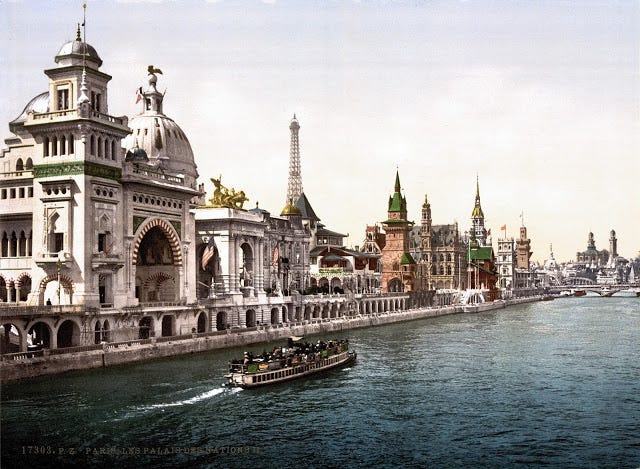
The
1900
World's Fair in Paris was one of the
most grandiose and renowned events in Europe at the beginning of the 20th
century. It attracted more than 50 million visitors to the French capital over
212 days.
This means a progressive but dramatic culling of the welfare state, in order to liberate the entrepreneurial powers that clearly are being throttled in many European countries, while letting cuddled Europeans take more responsibility for their own lives. But there is currently little if any recognition among the political mainstream or among the public at large, that more economic freedom is key for Europe now. It seems, therefore, that Europe will thus continue to decay for the foreseeable future until a massive crisis will finally awaken the Europeans from their stupor.
No comments:
Post a Comment