
Europe’s most serious crisis since WWII is now accelerating as anger crystalizes among the majorities. It will lead to a rough awakening for many.
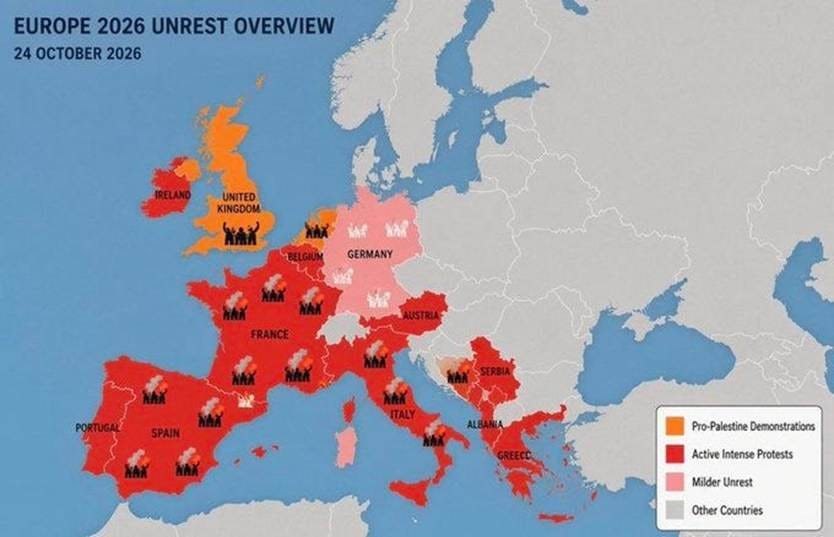
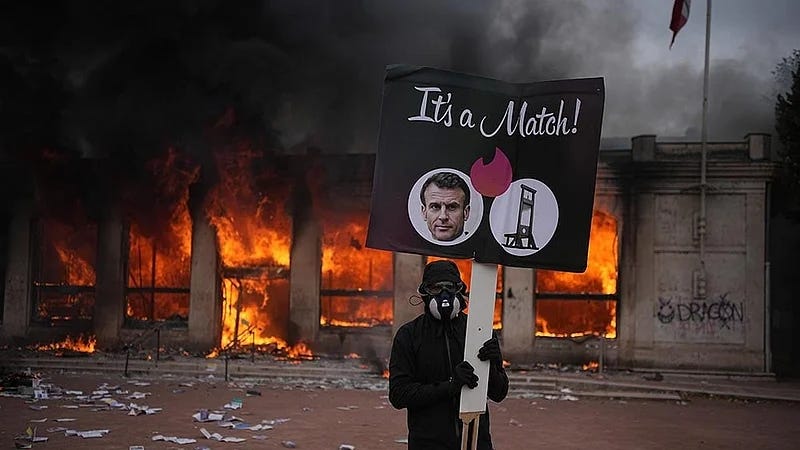
The shocking and nation-wide protests of October 17, 2026, in France are the clearest expression yet of a country, and a continent, in crisis. A perfect storm is brewing in Europe, largely of its own making. Europe’s “Eclipse of Intelligence,” to borrow Solzhenitsyn’s phrase, is coming to a head.
Europe’s crisis is largely endogenous. What some Europeans still believe are external shocks or isolated policy failures are, in fact, deep but expected issues inherent in the statist interventionist model that has progressively weakened economic growth, reduced individual freedom, increase state power, and skewed the relationship between rulers and ruled.
Since 1914, and in particular in the post-WWII era, steadily rising taxation has financed ever-expanding social spending and state bureaucracies. But the political, social and economic limits of this model are increasingly apparent: taxes cannot simply be raised indefinitely. With an aging population and inflows of under-educated immigrants, high labor force participation rates cannot be sustained. The old tax-and-spend approach, continually expanding “social rights” through higher taxation and debt is now reaching its limits. Some Europeans are waking up to this reality.
France Leading… the European Decline
Historically, France has repeatedly stood at the epicentre of wider political upheaval in Europe, from the revolutions of 1789, 1830 and 1848 to the Paris Commune of 1871 and, more recently, May 1968. The recent events in France may once again be acting as an early warning signal, as similar demonstrations have erupted elsewhere in Europe.
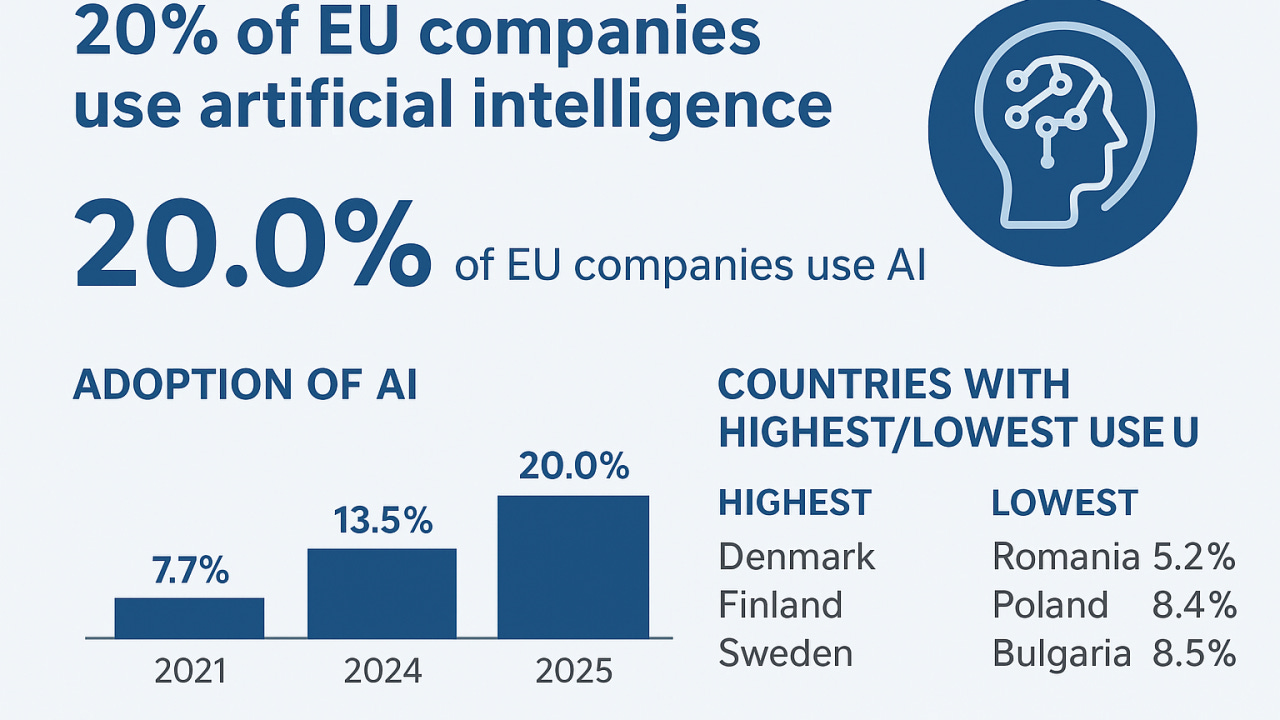
The root cause of the crisis in France is similar to what is happening in many other European countries, but more acute: long-term economic stagnation has left the French facing a rising cost of living. For young people, particularly those from immigrant backgrounds and those with few qualifications, the problems are more acute. They are facing poor educational conditions as students, and a high youth unemployment once they graduate. These already limited prospects now face further disruption from the rapid adoption of AI.
The social fracture between this bleak reality and the older, affluent urban “bobos” (“bourgeois-bohèmes”) is increasingly palpable. The latter form Macron’s dwindling base of support, yet inhabit a world far removed from both the immigrant-heavy Parisian suburbs such as Seine-Saint-Denis, and the modest, sometimes struggling, “France périphérique”, where the rise in fuel and electricity costs weigh heavily on household budgets.
All this is fertile breeding ground for social unrest and popular uprising, in a country with a long tradition of this kind. The stark reality slowly seeping into French society is that the bloated French state’s “modèle républicain” is failing. Its promise of “Liberté, Égalité, Fraternité” contains tensions that become increasingly difficult to reconcile as the state expands: coercive attempts to impose ever greater material equality inevitably come at the expense of individual liberty. The inevitable and predicted social decay from such an inefficient system is becoming increasingly visible, as the French joke sardonically that the one part of the public administration that never seems to fail is the tax collector.
The Social Contract Myth
Europeans should reconsider the idea of the “social contract” that they have been taught to take for granted. Unlike an actual contract, the relationship between individual and state does not rest on explicit consent: the state can impose new obligations, taxes and regulations without the individual’s agreement. In that literal contractual sense, the “social contract” is not a contract at all, but a political metaphor that has helped legitimize expanding state power.
If also political redistribution is accepted by society as overriding the natural distribution of income and wealth emerging from voluntary exchange in a free market, even public spending exceeding half of GDP can come to appear normal. France’s public spending is now said to be higher than that of the USSR…
Despite (or because?) such a level of public spending, the state’s fundamental Weberian mission - ensuring security and protecting private property on its territory - is no longer being fulfilled. This may seem like a paradox to many political newbies, whether they vote right or left. But the democratic “tragedy of the commons” at societal level is obvious for them to see if they shed their blinkers.
For instance, the Paris police prefect warned shopkeepers that even a reinforced police deployment could not guarantee the protection of every business, recommending private security, reinforced protection of premises and, where necessary, early or temporary closure. These measures impose additional costs on private owners, alongside potentially higher insurance premiums and further damage to the tourism industry. The result can only be additional strain on an already weakened economy.

Yet, most Europeans, regardless of political persuasion, still continue to look to the state (or sometimes even to the EU bureaucracy!), to solve problems that state intervention in society helped create in the first place. The causality is obviously reversed: the institution responsible for creating or exacerbating the problems in the first place is expected to provide the solutions. At some point this must change as the curtain comes down.
The Moral Responsibility of Europe’s Rulers
Apart from a few quite successful small and Nordic countries, most European nations face similar economic problems. The now infamous “Big 3” of Britain, France, and Germany are perhaps the worst off, which is serious since they are expected to lead European policy. Yet their leaders increasingly attribute Europe’s difficulties to external forces, thereby deflecting attention from domestic policy failures. As Macron stated in his address on Oct. 18th:
These protesters expressed concern about the cost of living, about fuel prices, which stem from the conflict started in the Persian Gulf, in which France did not take part and whose consequences we are facing.
Russia, Iran, China, even the USA, are convenient culprits. Such scapegoating is politically effective precisely because geopolitical claims are difficult for ordinary citizens to independently evaluate.
At the start of the Ukraine war, it was Europe’s political class that decided to cut crucial resource ties with Russia starting in Spring 2022. This contributed to a dramatic increase in European gas and energy prices. The European leaders just cheered this process on as anti-Russian ideology was apparently more important than the living standards of Europeans.
In the Middle East, not only have the Big 3 and the EU insisted upon Europe’s full support for the genocide in Gaza, but they also adopted the hardline stance of Washington and Tel Aviv, abandoning any support for peace and any consideration for the interests of Europeans citizens. As Macron wrote to Trump on 20th Jan 2026, one month before the attack which killed Iran’s leader, “My friend,.. we can do great things on Iran”. Yet, not one media with access to Macron is willing to challenge him.
European political leaders therefore bear substantial political and moral responsibility for policies that have over several decades created an energy and cost-of-living crisis. These consequences cannot simply be attributed to external actors, but to Western ruling oligarchy. But the European majorities are also responsible because they still fail to understand the limits of democracy.
Oligarchy vs. the People
The deeper political explanation for the current crisis is that the interests of Europe’s ruling minorities have increasingly diverged from those of the governed majority. This divergence has become particularly pronounced over the past decade: the forced “Green” transition and its impact on European industry; the top-down disruption of economic activity and public finances during Covid; and an increasingly aggressive foreign policy aimed at preserving Western hegemony in a rapidly emerging multipolar world.
Not only do the policies of the European ruling minority not align with the interests of the people, but nothing much is being done to reverse decades of statist economic policies in the form of high taxes, over-regulation, expensive social services and red tape, all of which throttle European competitiveness and innovation. It must be added that state interventionism is also responsible for unsustainable mass immigration that is dangerously increasing the crisis all over Europe.
The current unrest in France and elsewhere in Europe may be only the first overt signs of a much deeper economic, social and political reckoning. A debt crisis and an AI bubble pop are probably also coming. Ukraine and NATO’s defeat is coming and the EU’s humiliation. A “perfect storm” is gathering over Europe; not merely a political crisis, but a crisis of the whole statist economic model, the relationship between rulers and ruled, and ultimately, of Western values themselves. The months and years ahead will likely be dramatic. It will probably get darker for Europe before it gets brighter.
No comments:
Post a Comment